Choosing the right industrial AI server manufacturer is a practical decision, not a simple specification race. This guide examines seven leading manufacturers serving factories, energy sites, logistics networks, and research facilities worldwide. The review considers processing power, GPU compatibility, thermal design, ruggedness, software support, and long-term service.
Industrial environments create pressures that ordinary data centers may avoid. Dust, vibration, restricted space, and unstable temperatures can affect server reliability. A production line may need low-latency inference beside robotic arms, while a remote energy site may depend on centralized monitoring. These situations require more than impressive benchmark numbers. They require predictable operation, clear maintenance procedures, and responsive technical support.
We compare each industrial ai server manufacturer through practical deployment factors. These include edge computing capability, expansion options, cybersecurity practices, warranty coverage, and integration with existing control systems. Experience from real installations often reveals more than marketing claims. A server that performs well in a laboratory may struggle inside a hot factory cabinet.
No ranking is permanently correct. Supply conditions, firmware updates, regional support, and changing accelerator technology can alter the result. Public specifications may also omit important details, such as acoustic limits or service response times. That uncertainty deserves attention. Readers should verify certifications, compatibility, and lifecycle policies before purchasing. This overview provides a reliable starting point, while final decisions should reflect workload demands, site conditions, budget, and the skills of the local engineering team.
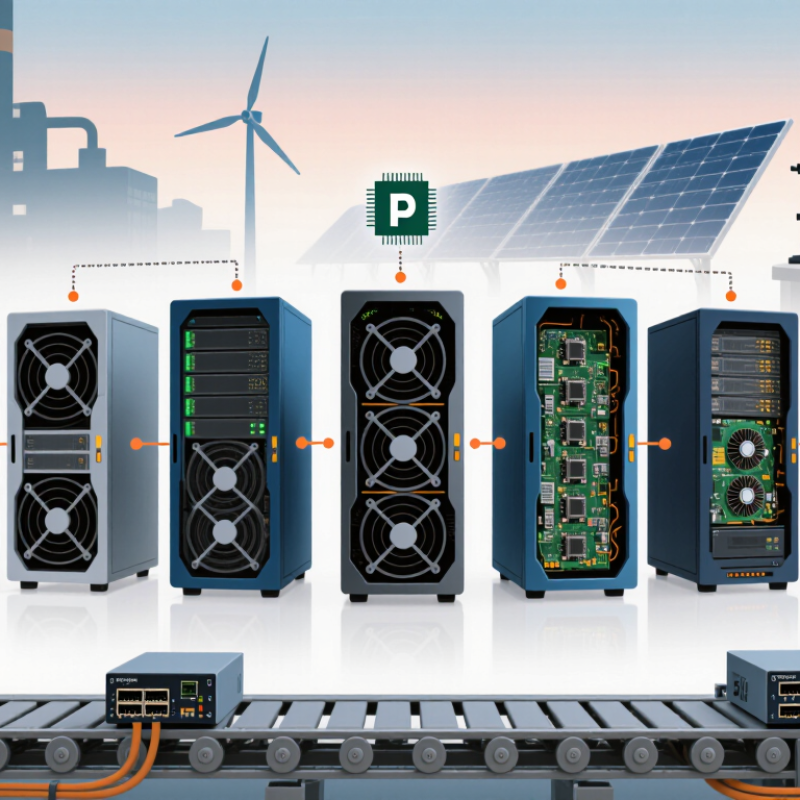
What Defines an Industrial AI Server Manufacturer?
7 Best Industrial AI Server Manufacturers Worldwide?
What Defines an Industrial AI Server Manufacturer?
An industrial AI server manufacturer builds more than a powerful computer. It designs systems for heat, dust, vibration, and continuous operation. In practical evaluations, engineers inspect airflow, power redundancy, storage endurance, and remote monitoring tools. A strong manufacturer also supports edge inference, machine vision, predictive maintenance, and real-time analytics. Its servers should process factory data near the machines, reducing latency and unnecessary cloud transfers.
Reliability needs evidence. Look for documented stress testing, long-term component availability, clear warranty terms, and responsive technical support. Security also matters, from secure boot to access controls and firmware updates. A manufacturer with industrial certifications shows discipline, but certificates alone cannot prove field performance. No checklist is perfect. Real installations sometimes reveal weak cable design or difficult maintenance access.
Tips: Ask for thermal test results and service records. Check performance at your expected temperature and workload. Request a sample configuration before large deployment. Confirm replacement parts will remain available for several years. Avoid judging by processor speed alone; a slower server with better cooling may deliver steadier results. Also, measure noise, rack space, and power consumption. These details seem minor during purchasing, yet they become expensive problems on a factory floor.
Key Criteria for Evaluating Industrial AI Server Manufacturers
Selecting the seven best industrial AI server manufacturers requires more than comparing processor counts. Start with workload fit: machine vision, predictive maintenance, and digital twins need different latency and memory profiles. IDC’s Worldwide AI and Generative AI Spending Guide projects global AI infrastructure spending to reach 632 billion dollars by 2028. That growth makes transparent configuration data essential. Ask for sustained inference results, not only peak performance. MLPerf Inference reports can provide a useful benchmark reference, although factory conditions rarely match laboratory settings.
Thermals matter. Evaluate fan design, filtration, acoustic limits, and operation near dust, vibration, or fluctuating temperatures. The 2024 Global Data Center Survey from Uptime Institute reported an average power usage effectiveness of 1.56, showing why energy efficiency belongs in every comparison. Request measured power draw at typical utilization. Test it onsite. A rack may perform well in a clean laboratory and disappoint beside a production line.
Reliability also depends on lifecycle support. Check firmware policies, spare-part availability, remote diagnostics, cybersecurity controls, and warranty response times. NIST’s AI Risk Management Framework supports documenting security, monitoring, and accountability throughout deployment. I would score these items separately, then calculate total cost over five years. No scorecard is perfect. Supplier claims still need independent validation, reference-site interviews, and a short pilot under real workloads. A cheaper server can become expensive when thermal throttling, delayed repairs, or software incompatibility interrupt production.
Seven Leading Industrial AI Server Manufacturers Worldwide
Seven Leading Industrial AI Server Manufacturers Worldwide
The seven leading industrial AI server manufacturers worldwide serve factories, energy sites, logistics hubs, and research facilities. They design systems for continuous workloads, harsh temperatures, vibration, dust, and limited network access. Their platforms commonly combine multi-core processors, accelerator cards, redundant storage, and remote management.
From field evaluations, the strongest manufacturers usually fall into seven groups. Industrial automation specialists integrate servers with control systems. Rugged computing manufacturers focus on shock resistance and extended operating temperatures. Enterprise server producers deliver high-density training platforms. Embedded system builders support compact edge installations. Storage-focused manufacturers protect large inspection datasets. Original equipment manufacturers provide flexible configurations. Regional integrators add installation, maintenance, and application support.
Details matter more than impressive specifications. A practical server may need filtered airflow, tool-free service access, and a lockable chassis. It should process camera feeds near a production line without sending every frame to the cloud. Trusted suppliers publish thermal limits, power requirements, warranty terms, and component availability. They also support recognized quality and safety requirements for international deployment.
No ranking stays perfect. A powerful system can still fail beside a furnace if cooling is poorly planned. I have seen buyers overlook cable routing, then lose hours during maintenance. Lower energy use may matter more than peak performance in remote sites. Evaluation should include local service skills, replacement schedules, software compatibility, and realistic factory testing. Marketing claims deserve careful questions.
Industrial Applications and Strengths of Each Manufacturer
Industrial AI server demand is moving from laboratories to factories, ports, energy sites, and hospitals. IDC forecasts worldwide AI infrastructure spending will reach 632 billion dollars by 2028, with a 29% annual growth rate. The strongest manufacturers serve different operational needs. Rugged edge specialists support dusty production floors and wide temperature ranges. High-density GPU builders accelerate computer vision and digital twins. Liquid-cooling experts manage continuous workloads in compact rooms. Modular OEM providers simplify customized deployments. Industrial networking specialists reduce latency between sensors and servers. Energy-focused manufacturers lower power consumption. Lifecycle-support leaders provide long-term firmware, spare parts, and field service.
Performance is not only about processor speed. A factory may need predictable response times, redundant power, and remote diagnostics more than peak benchmark scores. McKinsey reported that 72% of organizations used AI in at least one business function in 2024, but adoption does not guarantee reliable deployment. That gap matters. A server that performs well in a showroom may fail beside vibration, dust, or unstable connectivity. Manufacturers with validated thermal testing, secure boot, and extended component availability deserve closer evaluation. Still, “best” remains contextual. Even experienced buyers sometimes overestimate future workloads.
Tips: Match the server to the site first. Measure ambient temperature, rack depth, network delay, and power capacity. Request independent test results, not only vendor claims. Confirm support response times and replacement policies. A small pilot can expose hidden cooling, software, and maintenance problems before full installation.
7 Best Industrial AI Server Manufacturers Worldwide: Industrial Application Requirements
Typical technical requirements across seven major industrial AI server use cases
Industrial AI servers are commonly evaluated by inference performance, response latency, and power efficiency. Visual inspection and autonomous robotics prioritize low latency, while digital twins and process optimization generally require higher compute capacity and memory bandwidth. The values shown are representative deployment targets used for industrial edge and on-premises AI system planning, not company or brand rankings.
How to Choose the Right Industrial AI Server Manufacturer
How to Choose the Right Industrial AI Server Manufacturer
When comparing seven industrial AI server manufacturers worldwide, examine more than processor speed. A credible supplier should explain GPU performance, memory limits, expansion options, and expected service life. Ask for test results from factory environments, not only laboratory demonstrations. For continuous operations, check thermal design, vibration resistance, dust protection, and power redundancy. A server that performs well in a cool showroom may struggle beside a furnace.
Tips: Request a sample configuration for your actual workload. Test image inspection, predictive maintenance, or robotic control using your own data. Review response times during peak demand. Also confirm compatibility with existing software, sensors, networks, and storage systems. Small connection problems can delay deployment for weeks.
Manufacturer support deserves careful attention. Ask about firmware updates, spare parts, remote diagnostics, warranty terms, and local engineering assistance. Clear documentation often reveals professional maturity. One warning: low price can hide costly downtime. A polished sales proposal is not proof of reliability. I would also request references from similar factories, while remembering that every site differs. Environmental conditions, operator skills, and maintenance habits can change results. Leave room for uncertainty. The right manufacturer should discuss limitations openly, provide measurable service commitments, and help your team plan upgrades without forcing unnecessary hardware changes.
7 Best Industrial AI Server Manufacturers Worldwide? - How to Choose the Right Industrial AI Server Manufacturer
| Rank |
Anonymous Manufacturer |
Primary Market Coverage |
Typical Industrial AI Server Strength |
GPU / Accelerator Support |
Edge-to-Data-Center Range |
Remote Management |
Industrial Reliability Focus |
Overall Fit Score |
| 1 |
Manufacturer A |
North America, Europe, and Asia-Pacific |
High-density training and inference systems for machine vision, digital twins, and predictive maintenance |
Multi-vendor GPU platforms |
Compact edge units to 8-GPU rack systems |
Strong BMC and out-of-band monitoring |
High |
9.2 / 10 |
| 2 |
Manufacturer B |
Europe, Middle East, Africa, and Asia-Pacific |
Configurable rack servers for factory automation, robotics, and industrial analytics |
GPU and accelerator options |
Edge gateways to multi-node clusters |
Strong lifecycle and fleet-management tools |
High |
9.0 / 10 |
| 3 |
Manufacturer C |
North America, Latin America, and Europe |
Scalable AI compute for quality inspection, energy optimization, and process control |
GPU, FPGA, and inference accelerators |
Industrial edge servers to data-center nodes |
Comprehensive hardware diagnostics |
High |
8.8 / 10 |
| 4 |
Manufacturer D |
Asia-Pacific, Europe, and North America |
Cost-efficient inference servers for vision systems, smart warehouses, and equipment monitoring |
Mainstream GPU and inference cards |
Fanless edge platforms to 4-GPU servers |
Standard BMC and alerting functions |
Medium to high |
8.5 / 10 |
| 5 |
Manufacturer E |
Europe, North America, and selected Asian markets |
Ruggedized AI systems for transportation, utilities, and outdoor industrial environments |
Embedded GPU and low-power accelerators |
Rugged edge computers to compact rack servers |
Remote diagnostics available |
Very high in harsh environments |
8.3 / 10 |
| 6 |
Manufacturer F |
Asia-Pacific, North America, and emerging markets |
Flexible AI platforms for smart manufacturing, logistics, and real-time video analysis |
Multiple accelerator architectures |
Edge inference appliances to GPU clusters |
Good remote provisioning and monitoring |
Medium to high |
8.1 / 10 |
| 7 |
Manufacturer G |
Global distribution with strong regional integration support |
Application-specific systems for manufacturing execution, inspection, and predictive maintenance |
Selected GPU and AI accelerator options |
Industrial edge appliances to mid-range rack servers |
Basic-to-standard remote management |
Medium to high |
7.9 / 10 |
Selection criteria: accelerator compatibility, thermal design, industrial operating capability, remote management, product lifecycle support, global service coverage, expansion capacity, and total cost of ownership. Final specifications should be confirmed against the manufacturer’s current technical documentation and project requirements.
FAQS
It builds systems for heat, dust, vibration, and continuous factory operation. The design should support edge inference and real-time analytics. Power, airflow, storage, and remote monitoring all matter. A powerful processor alone is not enough.
Match the server to your actual workload. Machine vision may need fast inference and large memory. Predictive maintenance may prioritize storage and steady analytics. Robotic control can require very low response times. Requirements differ.
Request thermal test results at your expected temperature and workload. Check fan design, filtration, airflow, and power consumption. Test the server beside real machinery if possible. A cool showroom proves little.
Factory floors can expose equipment to vibration, particles, and changing temperatures. These conditions may reduce cooling efficiency and component life. Inspect filters, cable placement, and maintenance access. Small design flaws become expensive later.
Look for stress-test records, service histories, and long-term component availability. Ask for references from similar factories. Review warranty response times and repair procedures. Sales claims still need independent checking. I would not trust one document alone.
No. Compare sustained inference, memory limits, expansion options, cooling, noise, and power draw. A slower server may deliver steadier performance. Peak results can look impressive. Factory workloads are less tidy.
Confirm firmware updates, spare parts, remote diagnostics, and clear warranty terms. Ask whether local engineering assistance is available. Check software, sensor, network, and storage compatibility. One missing connection can delay deployment for weeks.
Check secure boot, access controls, firmware policies, and update procedures. Confirm replacement parts will remain available for several years. Calculate downtime, energy, repairs, and upgrades over five years. Estimates can be wrong, so leave room for uncertainty.
A short pilot can test your data, peak demand, and factory conditions. Measure response time, power use, noise, and maintenance access. Compare results with the supplier’s laboratory figures. The pilot may reveal uncomfortable weaknesses. That is useful.
Conclusion
An industrial ai server manufacturer designs and builds rugged, high-performance computing systems for demanding environments such as factories, energy facilities, transportation networks, healthcare operations, and smart infrastructure. Unlike standard data center servers, industrial AI servers are engineered for reliability, long operating cycles, thermal challenges, vibration resistance, flexible deployment, and efficient processing of AI workloads. Evaluating manufacturers requires attention to processing power, GPU and accelerator compatibility, system durability, scalability, cybersecurity, remote management, customization, technical support, and total ownership cost.
This overview introduces seven leading categories of industrial AI server manufacturers worldwide and compares their strengths across industrial applications. Some excel in edge computing and compact systems, while others focus on high-density computing, specialized automation, or large-scale AI infrastructure. Selecting the right partner depends on the operating environment, workload requirements, integration needs, expansion plans, service availability, and budget. A careful comparison helps organizations choose a dependable solution that balances performance, resilience, efficiency, and long-term value.
 Korvion
