An ai training server manufacturer designs and builds the specialized infrastructure behind modern artificial intelligence. These companies do more than install powerful graphics processors. They integrate GPUs, CPUs, high-speed memory, storage, networking, cooling systems, and management software into reliable computing platforms.
A well-designed server may contain eight GPUs, liquid-cooling pipes, and several high-speed network connections. These details directly affect model training time, energy use, system stability, and operating costs. The manufacturer must also understand workloads such as large language models, computer vision, and scientific simulation. Practical experience matters because a specification sheet cannot reveal every thermal or compatibility problem.
Jensen Huang, NVIDIA’s founder and a leading computing hardware authority, once said, “The more you buy, the more you save.” The statement reflects economies of scale, but it is not a universal rule. Buying more equipment can increase waste when workloads are poorly planned. A trustworthy ai training server manufacturer therefore studies data volume, model size, power limits, rack space, and future expansion before recommending a system.
This article explains what these manufacturers do, how their products differ, and which evaluation factors deserve attention. It also considers reliability, technical support, security practices, and total ownership cost. Some comparisons may look straightforward. They are not always so. A cheaper server may consume more electricity or require longer maintenance. The right decision combines measurable performance with honest operational judgment.
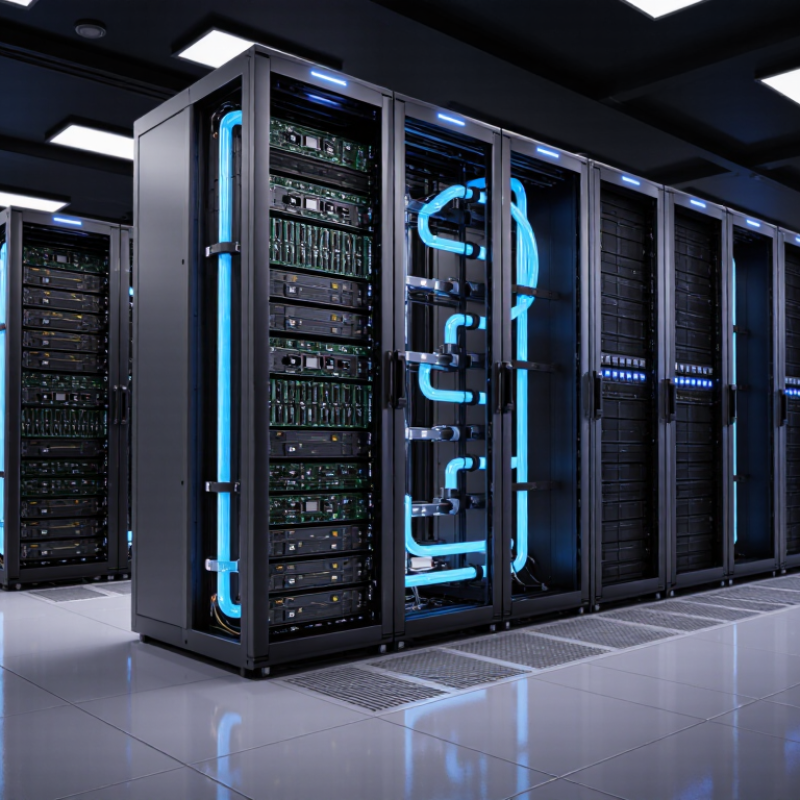
Definition and Role of an AI Training Server Manufacturer
What Is an AI Training Server Manufacturer?
Definition and Role of an AI Training Server Manufacturer
An AI training server manufacturer designs, builds, tests, and supports specialized systems for machine learning workloads. These systems usually combine multiple accelerators, high-speed memory, powerful processors, and fast network connections. The manufacturer must understand how these parts behave under sustained loads, not only how they perform in short demonstrations.
In practice, the role involves more than assembling hardware. Engineers select compatible components, manage heat inside dense racks, and test power delivery during long training sessions. They may inspect airflow with thermal sensors, verify firmware settings, and measure communication delays between servers. Reliable manufacturers also document maintenance procedures, warranty terms, and performance limits clearly. This information helps technical teams plan safer deployments.
Experience matters when a system trains models continuously for several days. A small cooling weakness can reduce performance or trigger unexpected shutdowns. No configuration is perfect. Engineers may need to revise fan curves, network layouts, or storage choices after real workloads expose hidden problems. That process requires honest testing and careful reporting, rather than impressive figures alone. Manufacturers also support integration with data-center infrastructure, security controls, monitoring tools, and applicable energy requirements. Their authority comes from repeatable results, transparent specifications, and practical support after delivery.
What Is an AI Training Server Manufacturer?
An AI training server manufacturer integrates accelerators, CPUs, memory, networking, storage, power delivery, and cooling into a validated system for large-scale model training.
Reference power budget for an eight-accelerator training server: eight 700-watt accelerators account for 5,600 watts, while the remaining values represent typical supporting-system and cooling requirements. The figures are engineering reference values, not company-specific data.
How Manufacturers Design and Build Training Systems
What Is an AI Training Server Manufacturer?
How Manufacturers Design and Build Training Systems
An AI training server manufacturer builds specialized systems for developing machine learning models. The work begins with workload analysis, not hardware selection. Engineers study model size, data volume, training time, and expected user demand. They then plan processors, accelerators, memory, storage, and high-speed networking. Every component must support the others. A powerful processor cannot fix a weak data path.
Thermal design receives constant attention.
Training servers may run at high utilization for many hours. Engineers use airflow modeling, temperature sensors, and carefully placed fans to control heat. They also design power delivery for sudden load changes. A typical validation process measures performance, energy use, noise, and component temperatures under sustained workloads. Small details matter. Cable routing affects airflow. Firmware settings can affect stability.
Reliable manufacturers test complete systems, not isolated parts. They run repeated training workloads, inspect error logs, and check recovery after power interruptions. They also document maintenance procedures for technicians. This practical evidence helps customers compare expected performance with real operating conditions. No design is perfect. A system may perform well in a laboratory but behave differently in a crowded data room. Experienced teams review these gaps and revise their assumptions. That reflection is important. It prevents impressive specifications from replacing dependable engineering. A well-built training system should be measurable, serviceable, and honest about its limits.
Services and Support Provided by Manufacturers
An AI training server manufacturer does more than assemble powerful hardware.
Its services begin with workload planning, including model size, accelerator count, memory capacity, storage speed, and network traffic. Experienced engineers may review a customer’s training schedule before recommending a configuration. This prevents an expensive server from becoming a bottleneck.
Support matters.
Manufacturers often provide installation guidance, rack integration, driver configuration, and performance testing. They can check airflow, power distribution, and temperature readings during deployment. Clear documentation helps internal teams maintain the system without waiting for outside assistance. Remote diagnostics may identify failed components, unstable firmware, or unusual thermal behavior. On-site service can be important when downtime affects a production deadline.
Reliable manufacturers also offer warranties, spare-part coordination, software updates, and technical training.
A useful support team explains problems in practical language, not only through ticket numbers. Response times should be written clearly in the service agreement. Every deployment is different. Even skilled teams can underestimate cooling demand or data movement. That weakness should be discussed openly. Manufacturers gain credibility when they report limitations, test results, and unresolved risks instead of promising perfect performance. Support should continue after delivery, because an AI server changes as models, software, and workloads grow.
Key Factors for Evaluating an AI Training Server Manufacturer
What Is an AI Training Server Manufacturer?
Key Factors for Evaluating an AI Training Server Manufacturer
An AI training server manufacturer designs and integrates systems for building machine-learning models. Its work covers accelerators, high-speed memory, networking, cooling, firmware, and support. Evaluation should begin with measurable performance, not attractive specifications. The Stanford AI Index 2024 reported that training compute for notable AI models has doubled approximately every 3.4 months. Therefore, a server platform must scale efficiently as workloads grow. Check accelerator compatibility, memory capacity, interconnect bandwidth, and performance per watt. A fast processor means little if data movement creates bottlenecks.
Operational reliability matters just as much. Ask for documented failure rates, thermal testing, service response times, and spare-parts availability. The Uptime Institute’s Global Data Center Survey 2024 identified power availability as a major constraint for expanding data-center capacity. This makes energy design and cooling support practical purchasing factors. Examine rack density, liquid-cooling readiness, remote management, and acoustic conditions. Request independent benchmark results using workloads similar to yours. Vendor tests can be useful, but they are not the whole truth. I have seen impressive benchmark numbers weaken under sustained, mixed workloads.
Tips: Require a pilot deployment before a large purchase. Measure training time, energy use, network stability, and recovery behavior. Also inspect documentation quality. A confusing manual can become an expensive delay. Choose manufacturers that explain limitations clearly, publish firmware policies, and support reproducible testing. Availability of engineers matters more than polished sales language.
Conclusion
An ai training server manufacturer designs and produces specialized computing systems for developing and running machine learning models. These manufacturers integrate core components such as high-performance processors, accelerators, memory, storage, networking equipment, power supplies, and advanced cooling systems. Their role is to balance computing power, reliability, scalability, energy efficiency, and compatibility so organizations can process large datasets and train complex models effectively.
Manufacturers typically design systems according to workload requirements, validate hardware and software integration, and optimize airflow, security, and remote management. They may also provide installation, system configuration, maintenance, technical support, upgrades, and troubleshooting services throughout the equipment’s lifecycle. When evaluating an ai training server manufacturer, buyers should consider product performance, expandability, component quality, energy efficiency, customization options, delivery capability, service responsiveness, warranty coverage, and long-term support. A dependable manufacturer should offer transparent technical information and solutions that can adapt to changing computational demands.
 Korvion
