Korvion
Korvion
Korvion
High-performance processing systems, rack servers, and critical components optimized for hybrid cloud deployments.
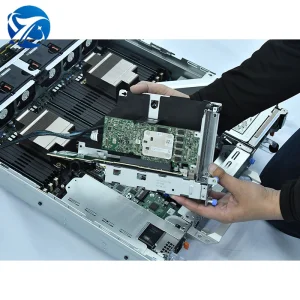
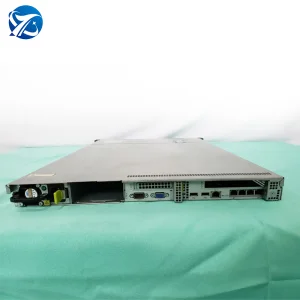
Technical considerations, market evolution, and how global enterprises deploy physical systems to scale hybrid operations.
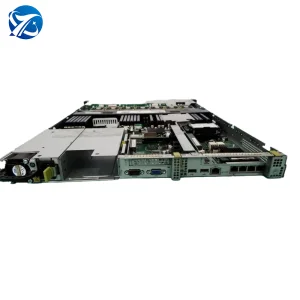
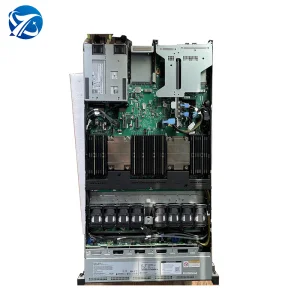
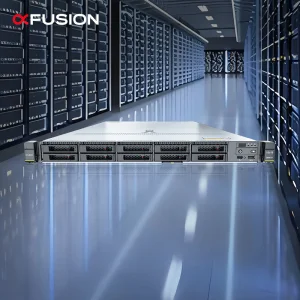
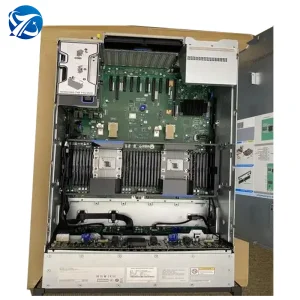
Modern enterprises no longer view hybrid cloud as simply dividing workloads between public AWS/Azure instances and local SANs. The rapid ascension of localized large language model (LLM) fine-tuning—such as the integration of complex deep learning pipelines—demands high-density GPU bare-metal infrastructure sitting within a local private cloud ecosystem, bound by low-latency hybrid fabric. Systems like the 2025 1288H V7 AI DeepSeek System enable organizations to compute highly proprietary intelligence operations on-premise while leveraging public nodes for general SaaS execution.
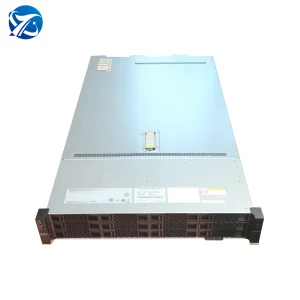
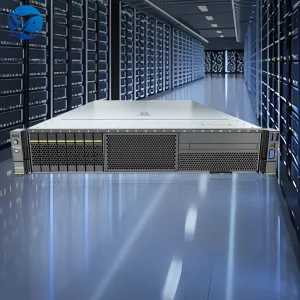
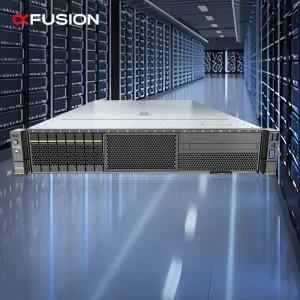
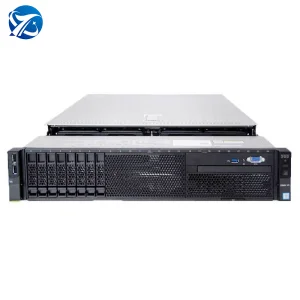
Consolidating compute, storage, and networking switches into individual, scalable rack nodes is the hallmark of modern datacenter procurement. Systems like the xFusion 2288H V6 Hyperconverged Infrastructure Server reduce rack footprint, simplify hypervisor deployment (VMware ESXi, Nutanix AHV, or open-source KVM), and significantly lower operational cooling budgets. By eliminating dedicated storage area networks (SAN) in favor of distributed software-defined storage (SDS) supported by high-speed PCIe SSD pools, enterprises realize unprecedented scalability.
Securing the hybrid boundary requires strict adherence to security at the silicon level. Modern servers feature hardware-based Root of Trust (RoT), secure boot protocols, and encrypted memory architectures. When exporting cloud systems across international boundaries, establishing clear documentation for cryptographic hardware components and TPM modules represents a critical compliance checkpoint that premium manufacturers proactively manage.
Key verification points for enterprise procurement officers and server datacenter architects.
Enterprise procurement teams tasked with scaling hybrid cloud infrastructure focus heavily on performance validation, hardware interoperability, and global maintenance agreements. A single node failure in a hyperconverged storage pool can degrade cluster performance across thousands of containers. Therefore, high MTBF (Mean Time Between Failures) ratings and verifiable tier-1 component sourcing are non-negotiable requirements.
| Use Case Category | Primary Hardware Need | Recommended Architecture |
|---|---|---|
| Edge Cloud Nodes | Short depth, high thermal resistance | 1U / 2U Single-socket Xeon Rack |
| Database / High IOPS | NVMe PCIe Gen4 Array & Hardware RAID | 2U Dual-Socket with 9540-8i Controller |
| AI Inference & Training | Multi-GPU topology & high PSU capacity | 2U/4U GPU Server (e.g., xFusion 2488H V7) |
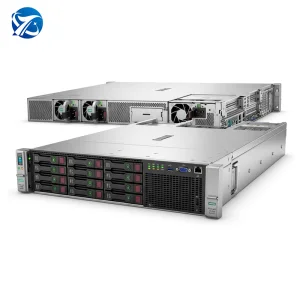
| Core Virtualization | Maximum RAM & Dual Core CPU density | HPE ProLiant DL380 / FusionServer 2288H |
The global server market relies heavily on the integrated supply networks located within China's tech hubs, particularly Shenzhen. The region consolidates everything from printed circuit board (PCB) design house operations, metal chassis fabrication, advanced thermal dissipation engineering, to custom firmware development. This geographic proximity drastically reduces the product development lifecycle.
For custom hybrid cloud configurations, a Chinese ODM can conceptualize, prototype, and manufacture custom server chassis, design high-efficiency cooling paths, and configure customized BIOS frameworks in a fraction of the time required by traditional Western vendors. This flexibility, coupled with raw purchasing power for key subcomponents, enables significant cost advantages that are passed directly to international cloud service providers and enterprise clients.
How China-based consolidation shortens lead times and ensures quality standards:
Ensuring cross-border deployments comply with GDPR, HIPAA, and local datacenter specifications.
Exported servers must support features that facilitate compliance with regional data sovereignty acts like GDPR (EU) and CCPA (USA). This includes hardware-based encryption acceleration (AES-NI), secure erasure tools integrated within the firmware for SSD retirement, and support for hardware security modules (HSM) that hold cryptographic keys locally, keeping private customer data strictly inside geopolitical borders.
Hardware exported to Western markets must pass rigorous safety and electromagnetic emissions testing. Premium manufacturers guarantee compliance with CE, FCC Class A, UL, RoHS, and CB standards. These certifications ensure that the servers operate safely within multi-megawatt datacenters without causing RF interference with adjacent network switches or storage arrays.
Enterprise clients often require custom firmware loads to prevent supply chain tampering. ODM factories facilitate direct flashing of verified open-source BMC (OpenBMC) or custom client-compiled BIOS systems inside a secure environment. This guarantees complete control over the out-of-band management interface and prevents backdoors.
Real-world implementations of specialized bare-metal and hyperconverged setups.
An AI-driven enterprise runs model training clusters in the public cloud to take advantage of temporary elastic GPU scaling. However, due to compliance, customer data cannot leave their on-premise facility. They deploy local GPU rack nodes like the 2026 Windows Dedicated Data Center Rack AI GPU server to ingest sensitive user telemetry and run real-time inference locally with ultra-low latency, feeding sanitized parameters back to the central cloud.
A multinational retail company operates regional distribution centers with high local transaction volume. Public cloud latency is too high for immediate inventory database lookups. They deploy a two-node xFusion 2288H V6 Hyperconverged Infrastructure Server cluster at each hub. The nodes synchronize storage volumes locally and upload consolidated batch files to the centralized ERP cloud during low-traffic night hours.
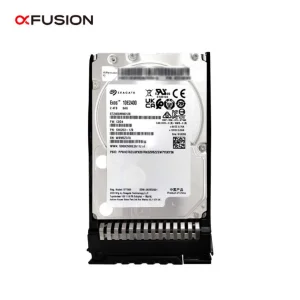
Banking institutions use hybrid tiering to manage storage costs. Highly transactional databases reside on-premise on ultra-fast PCIe NVMe SSDs (like the EP600 Series PCIe SSD) controlled by robust hardware RAID controllers to prevent data corruption. Non-critical analytical databases and deep archives are automatically migrated to cost-effective cold cloud storage through automated data-lifecycle policies.
Founded in 2017, Korvion Technology Co., Ltd. is a professional manufacturer and solution provider specializing in AI GPU servers, high-performance computing (HPC) systems, GPU clusters, and data center infrastructure solutions. Headquartered in Shenzhen, China, the company operates a modern production facility covering 385 square meters and serves customers worldwide with reliable, scalable, and customized computing platforms.
With over 9 years of export experience and 15 years of industry expertise, Korvion has established a strong reputation for delivering advanced computing solutions tailored to the rapidly growing artificial intelligence, machine learning, cloud computing, and enterprise data center sectors.
Quality is at the core of our operations. Korvion implements a comprehensive ISO 9001-based quality management system, supported by a dedicated team of 56 quality control professionals. Every product undergoes rigorous inspection procedures, including incoming material inspection, functional testing, burn-in testing, thermal performance verification, system stability validation, and final shipment inspection, ensuring dependable performance in mission-critical environments.
Our customized services include: custom metal chassis fabrication, custom silk-screen branding, hardware tier selection (Xeon/EPYC/GPU), specific server BIOS/UEFI parameter optimization, liquid-cooling system integration, high-reliability system validation, and pre-integrated rack-level cabinet assembly for immediate deployment.
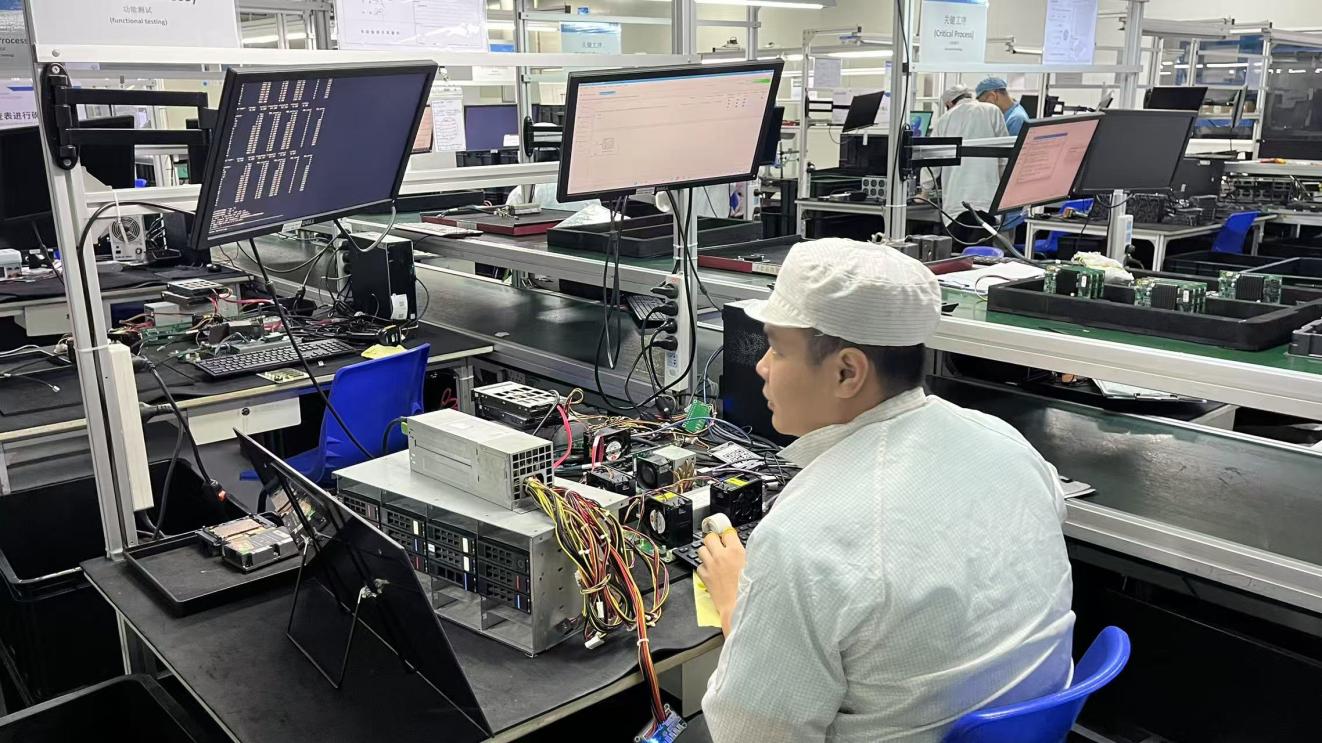
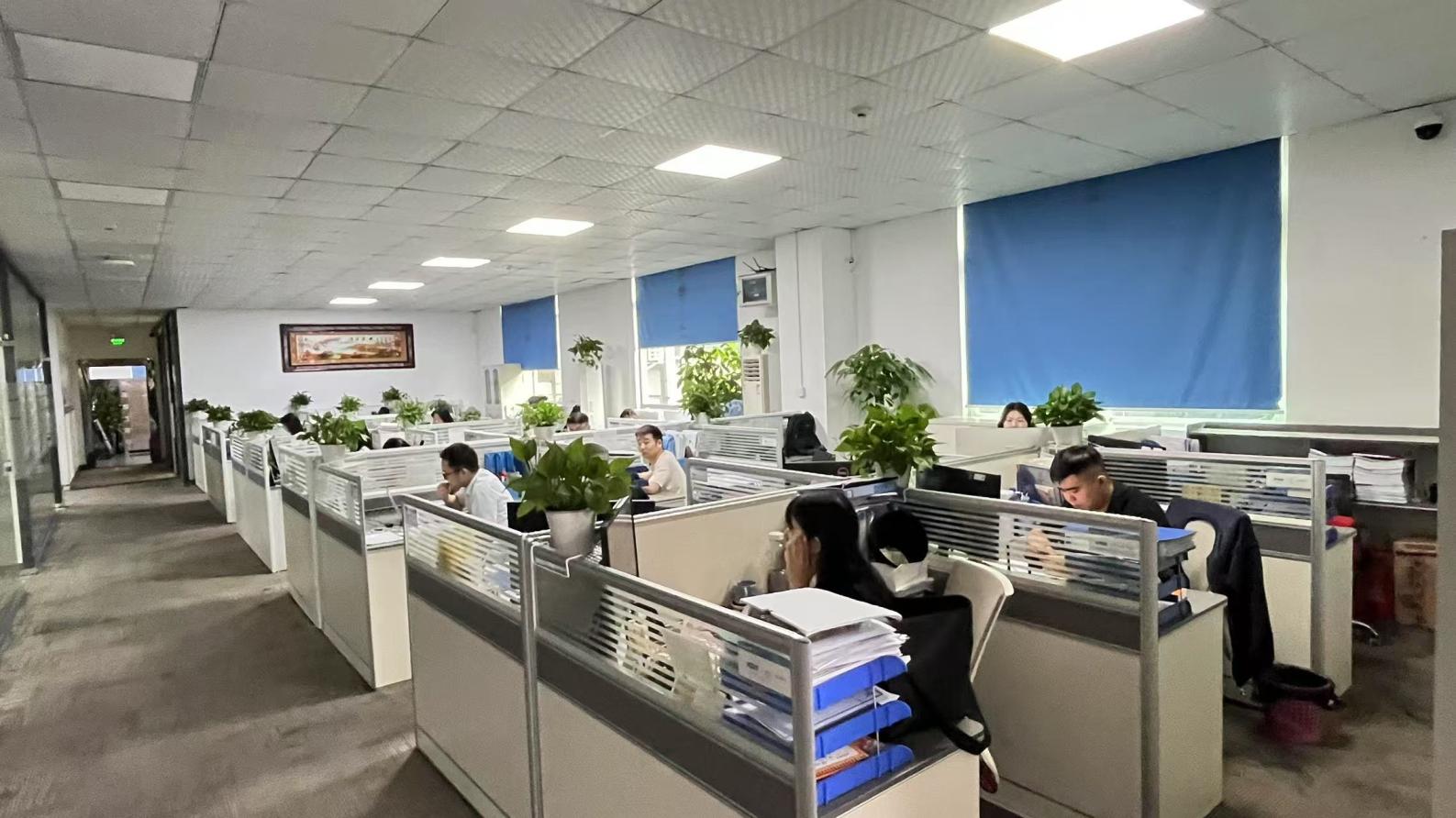
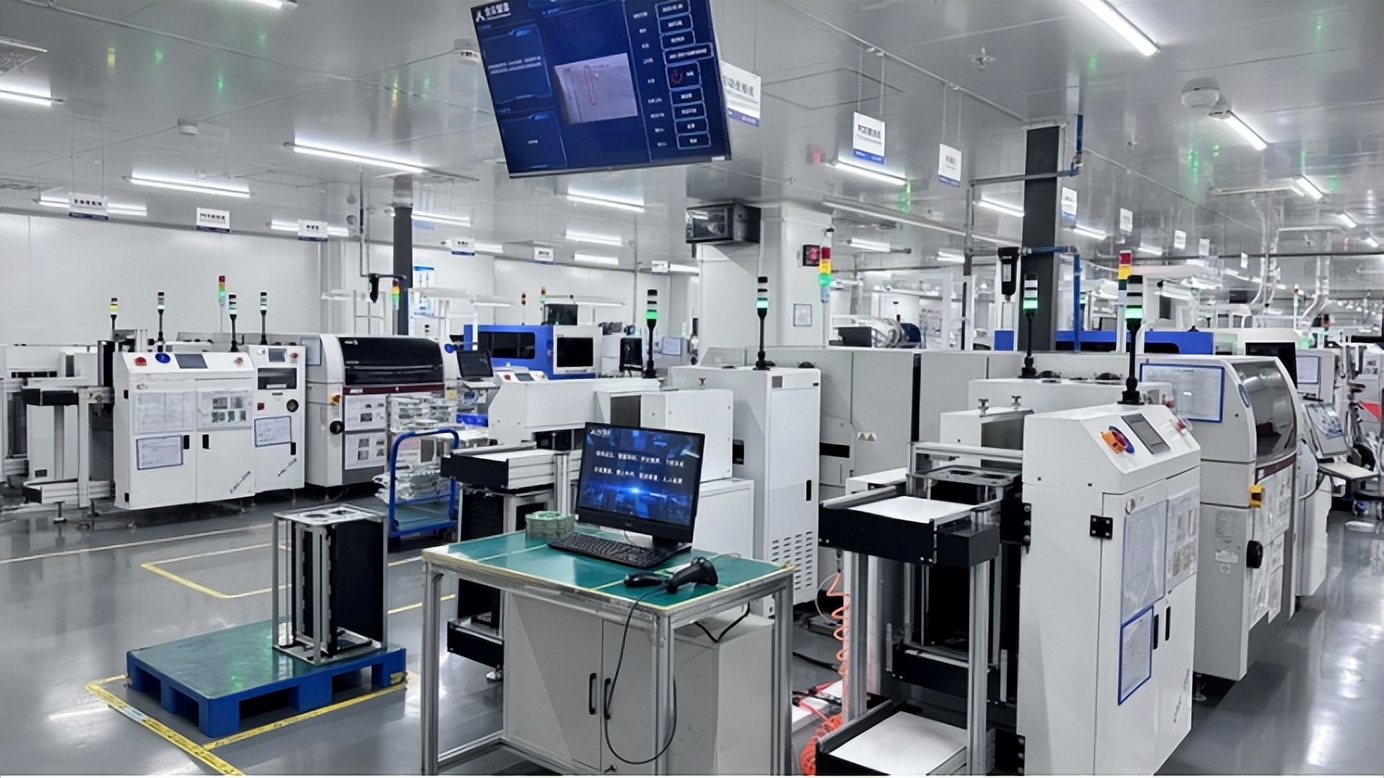
Explore our redundant power supplies, core optical switches, high-performance computing chassis, and dedicated servers.
Analyzing high-speed networks, data tiering models, and processing workloads in modern hybrid systems.
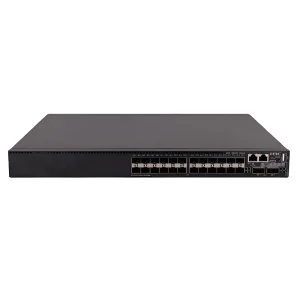
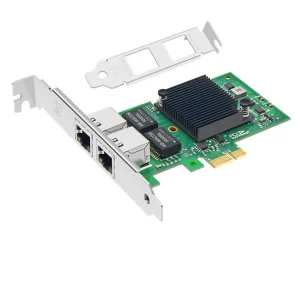
Hybrid environments demand high-throughput local pipelines to prevent network starvation. The integration of 10G and 40G optical switches, such as the H3C S6520X-30QC-EI Switch, is critical to bridge hyperconverged system boundaries. These switches support Layer 3 routing features, enabling low-latency packet inspection and rapid routing between the private VLANs and public MPLS/SD-WAN endpoints. Redundant physical uplinks configured with Link Aggregation Control Protocol (LACP) ensure that if a physical line fails, traffic seamlessly fails over to backup links without disrupting active virtual machine connections.
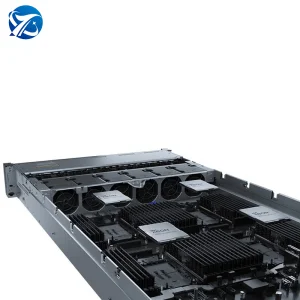
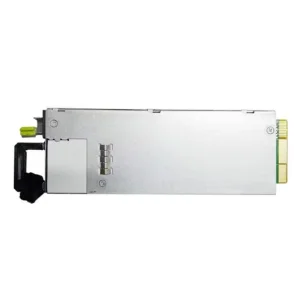
The computational footprint of deep learning has fundamentally altered the standard server hardware architecture. Modern systems require specialized PCIe slot spacing and massive auxiliary power budgets to drive modern tensor core arrays. The 2488H V7 AI DeepSeek Storage Server, for instance, utilizes high-efficiency 2.0 AC Platinum PSUs (ranging up to 2000W) to guarantee stable voltage supply under heavy synthetic floating-point workloads. Cooling arrays must also be dynamically controlled using advanced BMC monitoring loops, preventing thermal throttling during sustained model backpropagation operations.
Traditional storage protocols present significant latency bottlenecks in virtualized environments. To address this, modern hybrid cloud hardware utilizes NVMe over Fabrics to enable compute nodes to access shared NVMe SSD pools (using enterprise-grade modules like the EP600 Series SSD) at near-native PCIe latency. Controlled by robust hardware raid arrays running on PCIe Gen4 interfaces, these systems guarantee data integrity and immediate transactional commits, critical for transaction-heavy database pipelines and high-volume containerized web microservices.
Direct answers to the most common technical and logistics questions posed by procurement teams.