Korvion
Korvion
Korvion
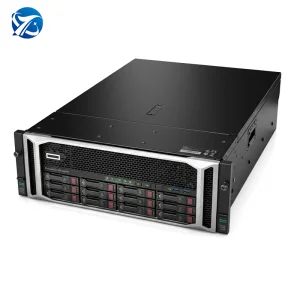
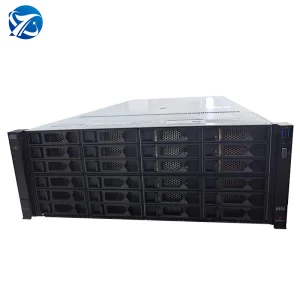
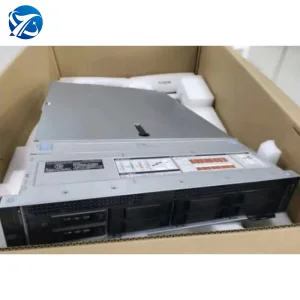
Enterprise-ready rack servers, processors, storage modules, and accelerator systems configured for redundant topologies.
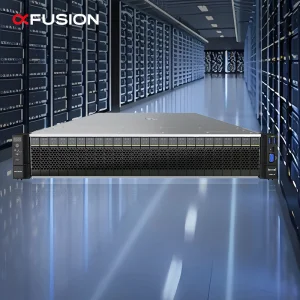
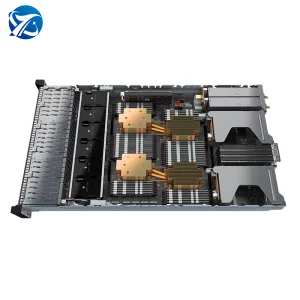
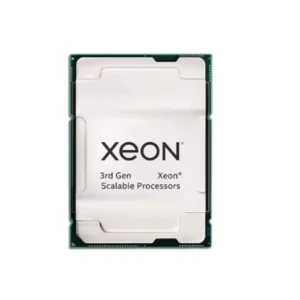
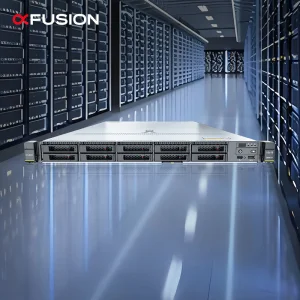
In the contemporary digital economy, transaction velocities and compute requirements are accelerating exponentially. System downtime is no longer measured solely in operational inconvenience; it is directly indexed to severe financial losses, SLA penalties, and irreparable reputational decay. Achieving true "High Availability" (HA) requires moving beyond basic hardware redundancies to implement system-level resilience, predictive diagnostics, and rapid automatic failover mechanisms.
At the center of any high-availability topology lies the elimination of Single Points of Failure (SPOFs). For computing infrastructures, this means integrating dual-redundant hot-swappable power supplies (PSUs), multi-channel redundant cooling fans, error-correcting (ECC) memory architectures, and RAID-backed or NVMe-over-Fabrics storage arrays. Furthermore, true HA requires active-active clustering, where load balancers partition workloads dynamically across multiple operational nodes, ensuring that if one node fails (such as an xFusion FusionServer or Dell PowerEdge host), computing flows continue with sub-millisecond interruption rates.
For modern artificial intelligence training and inference workloads (like executing deep neural networks or running local DeepSeek models), HA demands sustained data-path integrity. Because training clusters utilize multiple GPUs (e.g., in the FusionServer G8600 V7 8U GPU Rack Server), a failure in a single GPU board or a PCIe switch cannot be allowed to crash the entire Epoch calculation. Our architectural approach incorporates advanced system telemetry, dynamic host-to-GPU pathway reallocation, and N+N power supply configurations to keep deep-learning nodes continuously online under peak thermodynamic loads.
Dual-redundant configurations across PSUs, fans, network interface cards (NICs), and PCIe interconnect lanes ensure hardware continuous operation.
Rigorous compliance checking against EMC and low-voltage safety directives ensuring compatibility and certification compliance for European markets.
Load balancing, cluster heartbeats, and dynamic workload migration protocols ensuring near-zero MTTR (Mean Time to Repair).
Analyzing the convergence of artificial intelligence, liquid-to-air thermodynamics, and CXL memory pooling over the next decade.
Implementing DDR5 Server RAM with on-die ECC and system-level error containment (ECS). Transitioning to PCIe Gen 5 topologies (speeds up to 32 GT/s) with hot-plug NVMe storage solutions for minimal downtime under massive read/write cycles.
Integrating machine learning agents directly onto the Baseboard Management Controller (BMC) firmware. Real-time telemetry monitoring predicts power rail oscillations or memory wear-out before physical module failure occurs. Compute Express Link (CXL) enables dynamic memory sharing and failover.
Direct-to-chip and immersion liquid cooling architectures become standard for high-density compute configurations. Integrating smart manifold systems that dynamically control fluid flow based on active GPU/CPU thermal sensors, mitigating physical hotspot failures.
How high-availability hardware integrates across key global business domains to secure continuous digital operations.
| Vertical Market | HA Architecture Requirements | Primary Hardware Configuration | Compliance & Certifications | System Status |
|---|---|---|---|---|
| AI Training & LLM Cloud | 8U Multi-GPU cluster, redundant high-bandwidth network fabrics (InfiniBand/ROCE). | FusionServer G8600 V7, Xeon Scalable Processors, DDR5 ECC Ram | CE, RoHS, WEEE compliance | Active-Active |
| FinTech & High-Freq Trading | Ultra-low latency sub-microsecond execution, hot-spare transaction logs. | 1U/2U High-frequency rack servers (xFusion 2288H V7 / DL360 Gen12) | CE EMC Directive, FCC, Class A | Active-Active |
| Cloud Service Providers (CSP) | Massive scale virtualization, high-density storage arrays, hot-plug backplanes. | xFusion 2488H V6 (4-socket), HPE DL380 Gen12, SAS HDD Arrays | CE Low Voltage Directive (LVD) | N+1 Redundant |
| Enterprise Edge & Smart Factory | Rugged localized server nodes, shock resistance, broad operating temperature ranges. | 1U/2U short depth compute servers with redundant AC/DC PSUs | CE, IP5X certification path | N+1 Redundant |
Years of Industry Expertise
Annual Export Value
Supply Chain Partners
R&D Engineers
For European and global procurement entities, the "CE" (Conformité Européenne) marking is not merely a label; it represents verification of safety, electromagnetic compatibility, and environmental sustainability. Exporting high-capacity computational infrastructure into the European Union demands compliance with essential regulatory directives:
1. Low Voltage Directive (LVD) 2014/35/EU: Ensures electrical infrastructure, including high-output 900W up to 3000W redundant power supplies found in modern rack servers, maintains comprehensive electrical isolation. It guards operators and systems against dielectric failures, chassis leakage currents, and thermal overloads.
2. Electromagnetic Compatibility (EMC) Directive 2014/30/EU: High-performance GPU servers like the G5200 V7 run high-frequency PCIe and memory buses, emitting broad spectrum noise. EMC compliance confirms that our server designs maintain low electromagnetic interference (EMI) profiles, preventing interference with surrounding digital systems while ensuring sufficient immunity to external electrostatic discharge (ESD) and power line surges.
3. RoHS Directive 2011/65/EU (and amendment 2015/863): Regulates the restriction of hazardous materials in our semiconductor, PCB assembly, and chassis plating lines. We verify that all components from our 1,250+ supply chain network are free from lead, mercury, hexavalent chromium, and specific phthalates, supporting clean environmental recycling cycles.
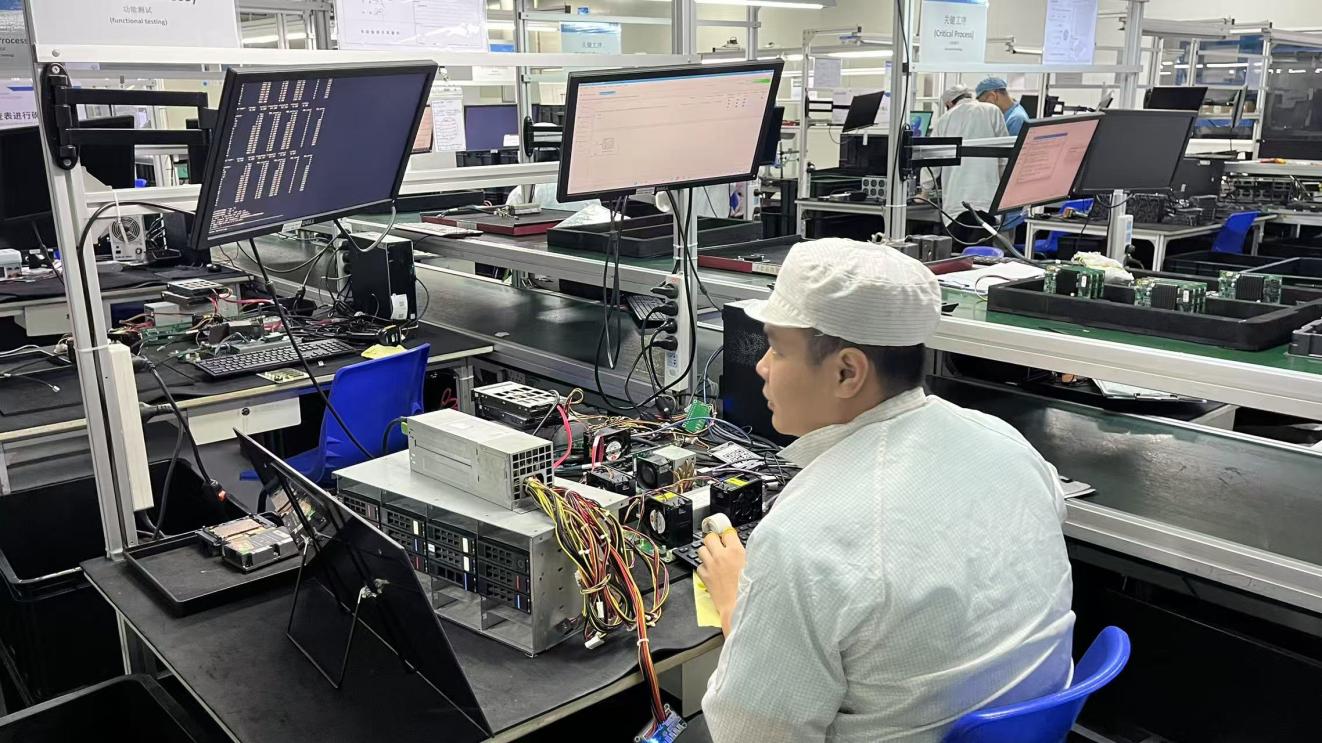
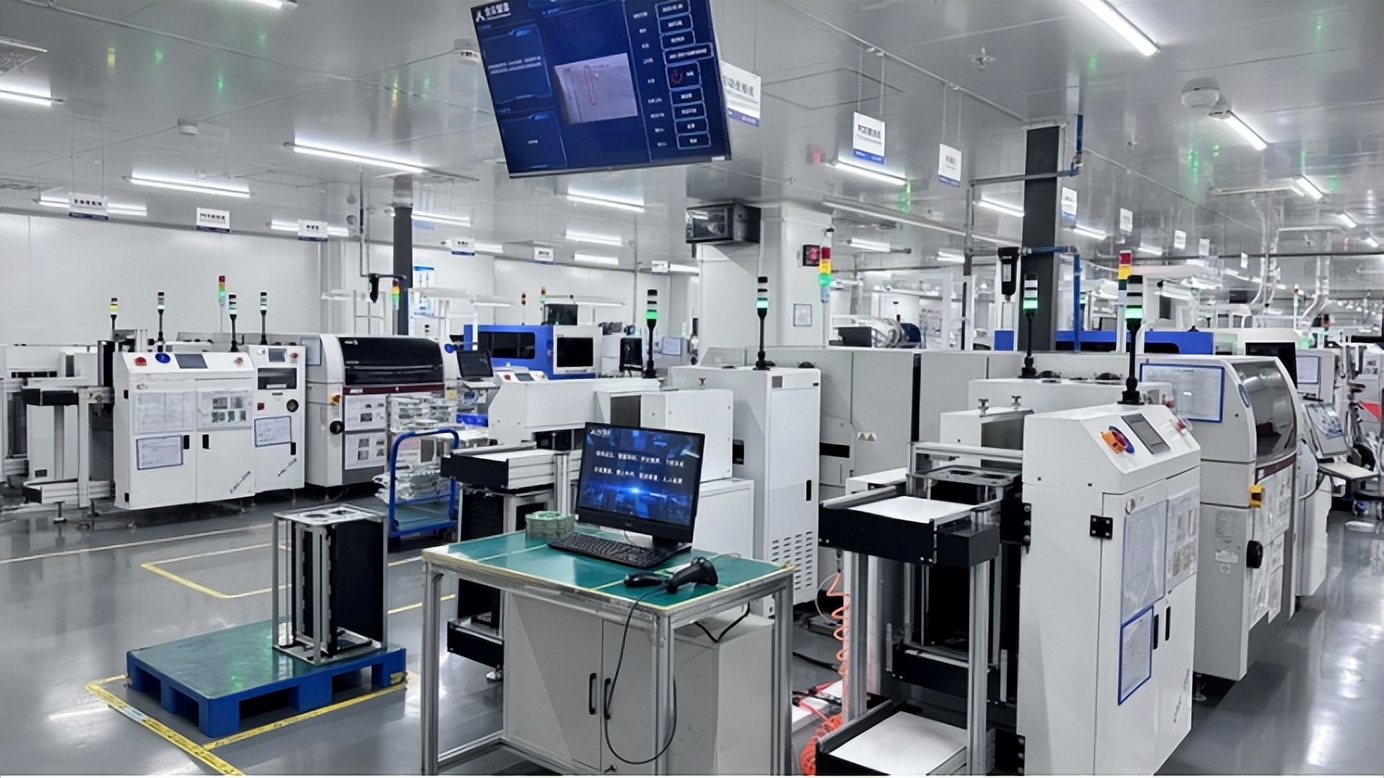
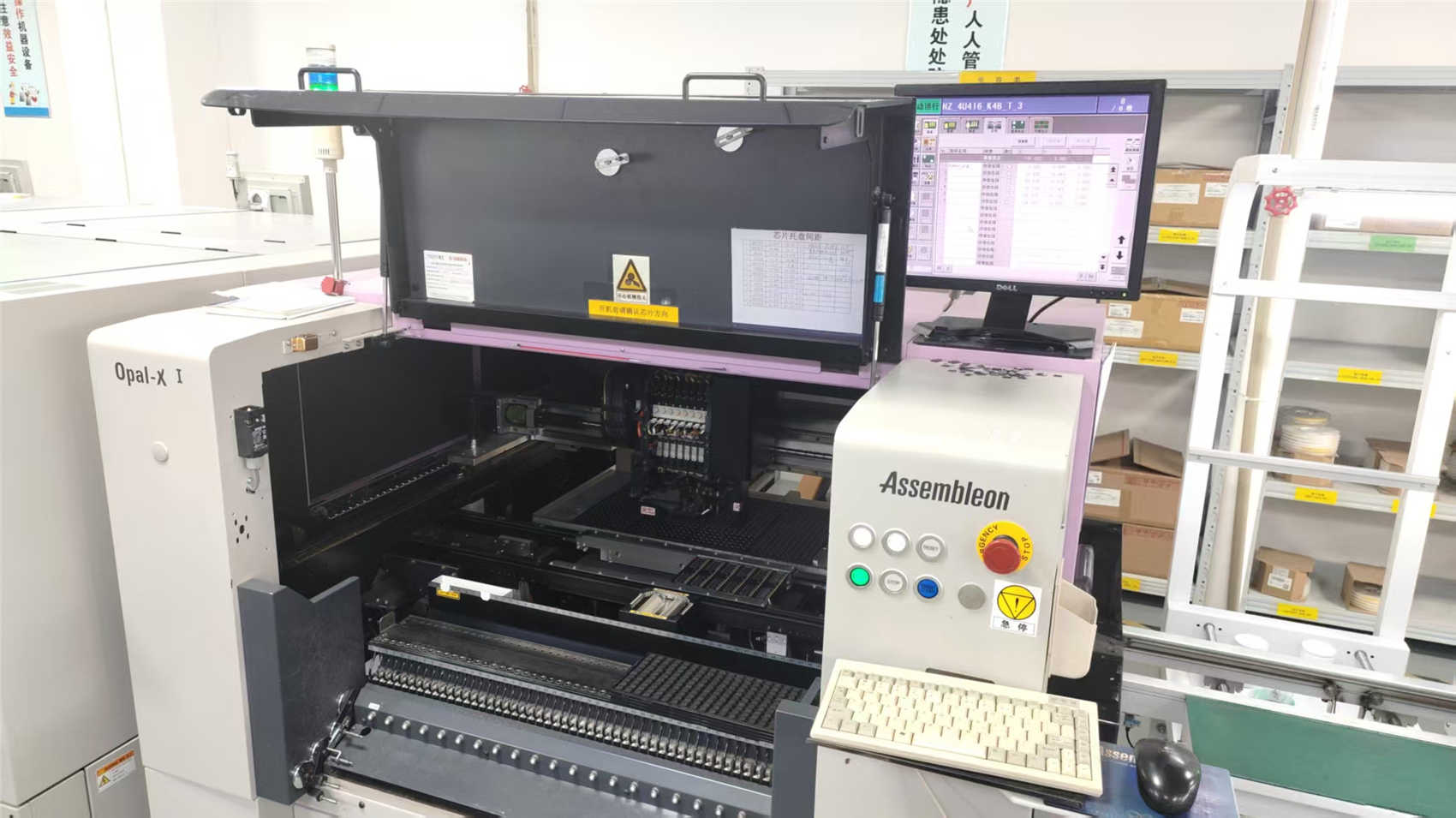
Operating from Shenzhen, the global hub of electronics manufacturing, Korvion leverages a highly localized and optimized supply network. Our facility features advanced testing chambers, surface-mount technology (SMT) interfaces, and specialized server assembly configurations. By grouping components like bare PCBs, memory ICs, logic controllers, and structural components within a tight regional radius, we mitigate global logistical blockages and maintain consistent delivery timelines.
Quality control operates under a structured, ISO 9001-certified operational matrix. An incoming shipment of capacitors or memory modules is routed through our incoming material inspection protocol (IQC). During assembly, systems undergo automated optical inspection (AOI), thermal stress testing (dynamic cycling from -10°C to +55°C), and full-load burn-in testing lasting 48 to 72 hours. This intensive methodology checks the resilience of all system pathways, helping minimize Dead-on-Arrival (DOA) risks to virtually zero before global shipping.
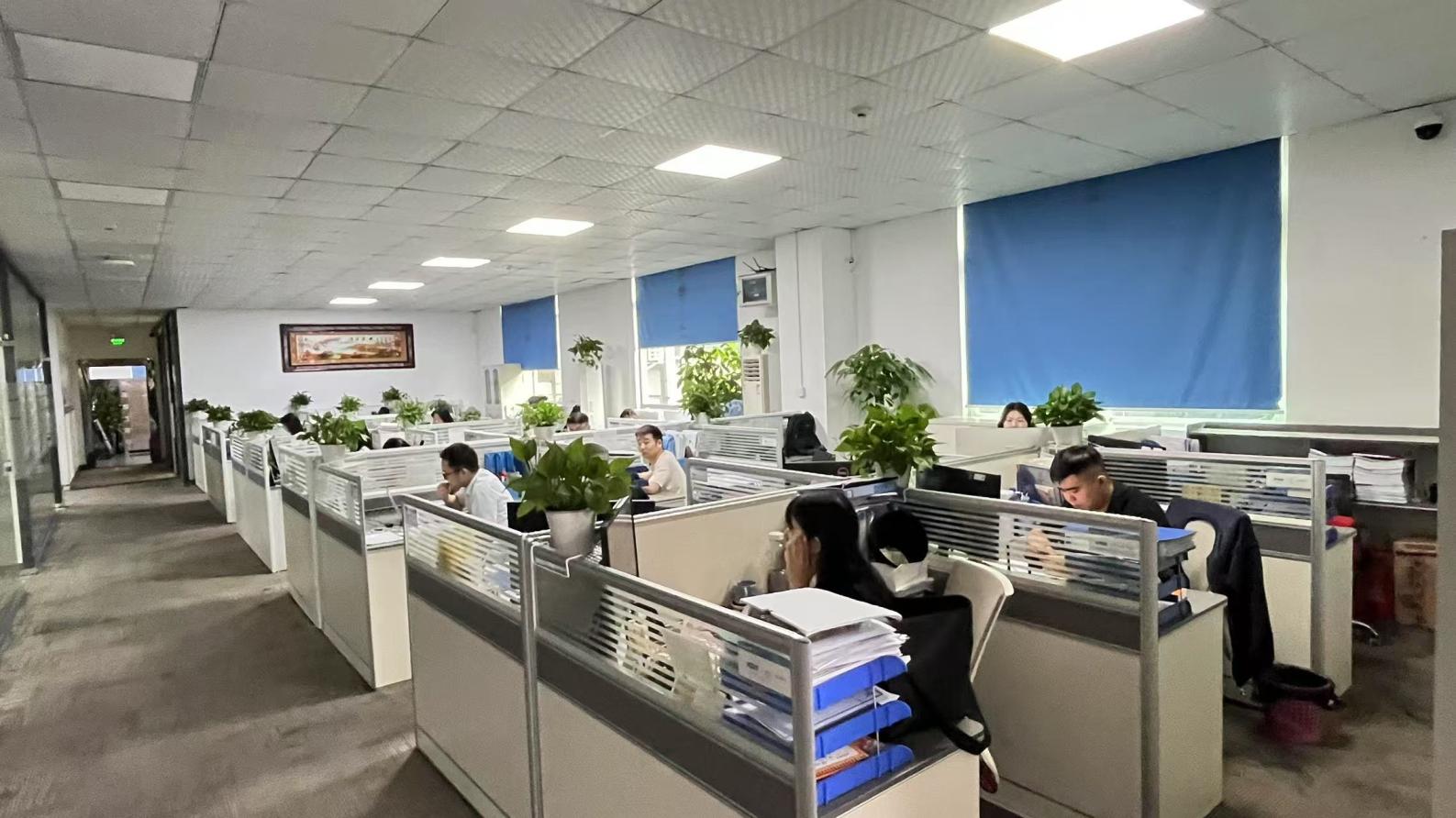
Founded in 2017, Korvion Technology Co., Ltd. is a professional manufacturer and solution provider specializing in AI GPU servers, high-performance computing (HPC) systems, GPU clusters, and data center infrastructure solutions. Headquartered in Shenzhen, China, the company operates a modern production facility covering 385 square meters and serves customers worldwide with reliable, scalable, and customized computing platforms.
With over 9 years of export experience and 15 years of industry expertise, Korvion has established a strong reputation for delivering advanced computing solutions tailored to the rapidly growing artificial intelligence, machine learning, cloud computing, and enterprise data center sectors.
Our annual export revenue exceeds USD 18 million, supported by a robust global supply network of more than 1,250 supply chain partners. We work closely with leading component suppliers to ensure stable product quality, competitive pricing, and timely delivery.
Quality is at the core of our operations. Korvion implements a comprehensive ISO 9001-based quality management system, supported by a dedicated team of 56 quality control professionals. Every product undergoes rigorous inspection procedures, including incoming material inspection, functional testing, burn-in testing, thermal performance verification, system stability validation, and final shipment inspection, ensuring dependable performance in mission-critical environments.
Innovation drives our growth. Our R&D department consists of 128 experienced engineers specializing in server architecture, thermal design, AI computing optimization, and customized hardware integration. Last year alone, Korvion introduced 86 new products and solution upgrades, helping customers stay competitive in the evolving AI infrastructure market.
We offer comprehensive OEM and ODM services, including chassis customization, branding, hardware configuration, rack integration, liquid cooling deployment, GPU cluster design, and turnkey AI infrastructure solutions. Our flexible customization capabilities allow customers to build solutions that precisely match their business and technical requirements.
Today, Korvion serves a diverse customer base, including AI startups, cloud service providers, system integrators, research institutions, universities, enterprise data centers, and GPU hosting companies across North America, Europe, Southeast Asia, the Middle East, and Latin America.
For international buyers, selecting the right server configuration is critical to ensure compatibility, long-term stability, and continuous operation. Use this checklist during your evaluation:
Verify configuration offers N+1 or 2N redundant hot-swappable PSUs (80 Plus Platinum or Titanium efficiency levels) to withstand power rail drops.
Look for dynamic multi-zone fan arrays with N+1 backup. Ensure system configuration keeps CPU and GPU cores below threshold temperatures at peak loads.
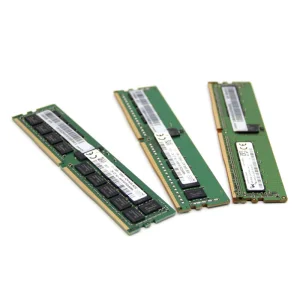
Incorporate DDR5 or DDR4 ECC Registered RDIMMs that feature multi-bit error correction, memory mirroring, and sparing capabilities to reduce operating system faults.
Answers to key technical questions about our high availability architectures, certifications, and manufacturing workflows.
High-capacity networking switches, RDIMM memory expansions, and high-density GPU platforms for clustered computing environments.